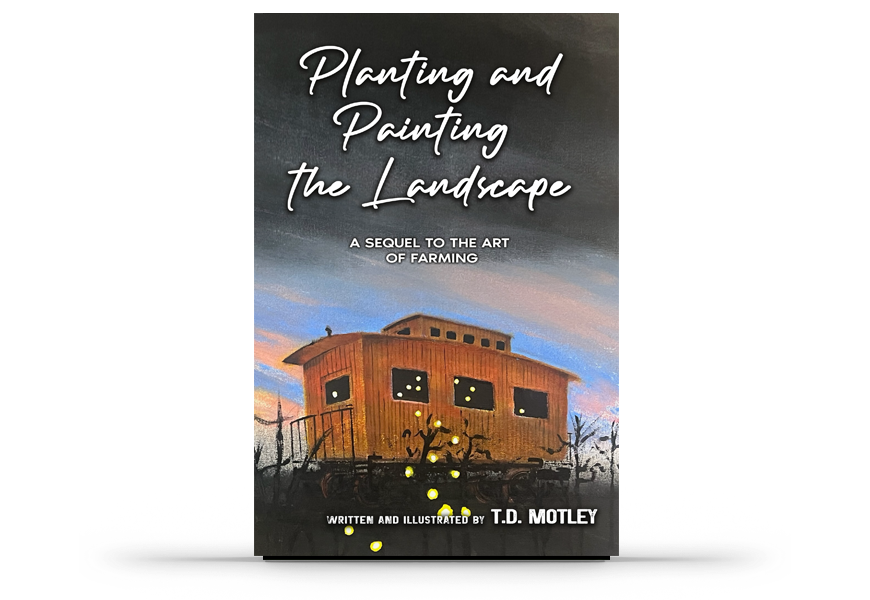
Planting and Painting the Landscape

A Sequel to The Art of Farming

An aging artist-farmer in North Texas tends his thirty-acre sanctuary while development closes in, balancing painting, teaching, and family life. This quiet, wry novel celebrates stewardship, community, and creativity as acts of resistance, where gardens, animals, and night skies shape a deeply rooted sense of home.

About

An artist-farmer who defends his homestead with paintbrush, shovel, and love as the modern world presses in.

Planting and Painting the Landscape is a warm, reflective novel about an aging artist-farmer, Sam Bartlett, who tends thirty acres of North Texas land while wrestling with memory, creativity, and change. A sequel to The Art of Farming, it blends richly observed scenes of daily farm work—gardening, livestock, and Saturday farmers markets—with the inner life of a painter whose nights belong to the Muse and the stars. As Sam and sidekick Annie navigate suburban sprawl, family transitions, and the encroaching language of “branding” and “development,” the farm becomes a fiercely protected sanctuary where stewardship, community, and craft still matter.

Told in Sam’s wry, intimate voice and accompanied by the author’s own illustrations, the novel celebrates slow work—stretching canvases, building raised beds, mentoring teens, and cooking shared meals—as a quiet act of resistance to a noisy, hurried world. Readers who love character-driven rural fiction, art and nature writing, or stories where place feels as alive as the people will find themselves at home in Elysia’s fields, verandas, and dark, star-filled skies.

Details

Category: Fiction

Publication Date: August 18, 2026

ISBN (hardcover): 978-1-965766-89-7

ISBN (paperback): 978-1-965766-87-3

ISBN (ebook): 978-1-965766-88-0

List price:  $39.95/$24.95/$2.95

Category: Fiction/Small Town & Rural

Pages: 216

Trim size: 6×9

Publication date: August 18, 2026

Reviews
Sharon Hudgins, Author, T-Bone Whacks and Caviar Snacks

“A delightful read that weaves together a tapestry of Texas farm life and ancient history, artists' techniques and classic literature, adventures abroad and mouthwatering meals. The author's genuine love of plants, animals, art, and the lives of his fictional characters shines through every page of this beautifully written book. Highly recommended.”

Jon Frembling, Head of Archives, Amon Carter Museum of American Art and author of Moving Pictures: Karl Struss and the Rise of Hollywood

“A meditative return to art making, the Texas landscape, and four-legged scoundrels in yarn-spinning at its best.”

Judy Tedford Deaton, chief curator, The Grace Museum, Abilene

“T.D. Motley has finally revealed the true identity of the much-maligned Mr. McGregor. He was an artist, author, devoted patriarch and horticulturist, who organized hayrides on moonlit nights. He was also a follower of Epicurean ideals of a tranquil life of moderate pleasure and friendship. If you have a desire to escape the hectic pace of contemporary life, grab a carefully crafted cup of organic coffee and cozy up with your favorite fluffy or furry companion for a trip to what fellow Texan, Horton Foote described as a trip to bountiful.”

About the Author

T.D. Motley

T.D. MOTLEY is a Texas painter and academic. Born in Beaumont, he’s been drawing since age three. Motley is Professor Emeritus of Art and Art History at Dallas College. His drawings and paintings have been shown in many national exhibits and are included in numerous U.S. and Texas collections.

Reviews

Sharon Hudgins, Author, T-Bone Whacks and Caviar Snacks

“A delightful read that weaves together a tapestry of Texas farm life and ancient history, artists' techniques and classic literature, adventures abroad and mouthwatering meals. The author's genuine love of plants, animals, art, and the lives of his fictional characters shines through every page of this beautifully written book. Highly recommended.”

Jon Frembling, Head of Archives, Amon Carter Museum of American Art and author of Moving Pictures: Karl Struss and the Rise of Hollywood

“A meditative return to art making, the Texas landscape, and four-legged scoundrels in yarn-spinning at its best.”

Judy Tedford Deaton, chief curator, The Grace Museum, Abilene

“T.D. Motley has finally revealed the true identity of the much-maligned Mr. McGregor. He was an artist, author, devoted patriarch and horticulturist, who organized hayrides on moonlit nights. He was also a follower of Epicurean ideals of a tranquil life of moderate pleasure and friendship. If you have a desire to escape the hectic pace of contemporary life, grab a carefully crafted cup of organic coffee and cozy up with your favorite fluffy or furry companion for a trip to what fellow Texan, Horton Foote described as a trip to bountiful.”

John David Farmer, exhibitions director, Dahesh Museum of Art, New York

“What a pleasure to revisit Sam Bartlett's place and his love of organic farming, family, friends, art, animals, and projects. In Planting and Painting the Landscape, T. D. Motley returns to the rural Texas farm and community he introduced in The Art of Farming, considerably enlarging its scope geographically and psychologically. Motley’s evocative writing offers generous considerations of life sciences, art history and ancient mythology, all in the service of expansive family history and the pleasures of a life that is rooted in the land. Sam knows his farming stuff, loves his human and animal associations, and offers the reader a choice roster of historic and contemporary artists who have influenced his development as a humanist. Homeric themes subtly underlie a survey of relationships and the cycles of rural activity.

E. Luanne McKinnon, PhD, author

“This is a book of lessons made over time in Elysia, a small Texas town. From the start, there is an interweaving of the ancient with the current-day. T. D. Motley’s language, through his protagonist, Sam Bartlett is a tapestry of particulars. It takes care to speak about the sylvan place that is Bartlett Farm and as the title states, “Planting and Painting the Landscape,” we read about light and color, details and distance, when Sam, sitting with Annie on their porch reveres the dusk, sunsets, and star-filled skies as Frederick Church, in the Adirondacks, may have. Like Twain’s Missouri, Motley’s Texas is personal and universal. We are readers of a dialect of “knowing” spoken with enchanting fluency. Here, the lessons are simple and profound: care for everything; regard beauty; leave nothing untended.”