Lone Star Literary Life

“The tale Heath Hamrick weaves is part small-town history, part memoir, part remembrance…But the main focus of the book is how a team and a community grieve when they lose a player, a brother, a friend.” 

Read More

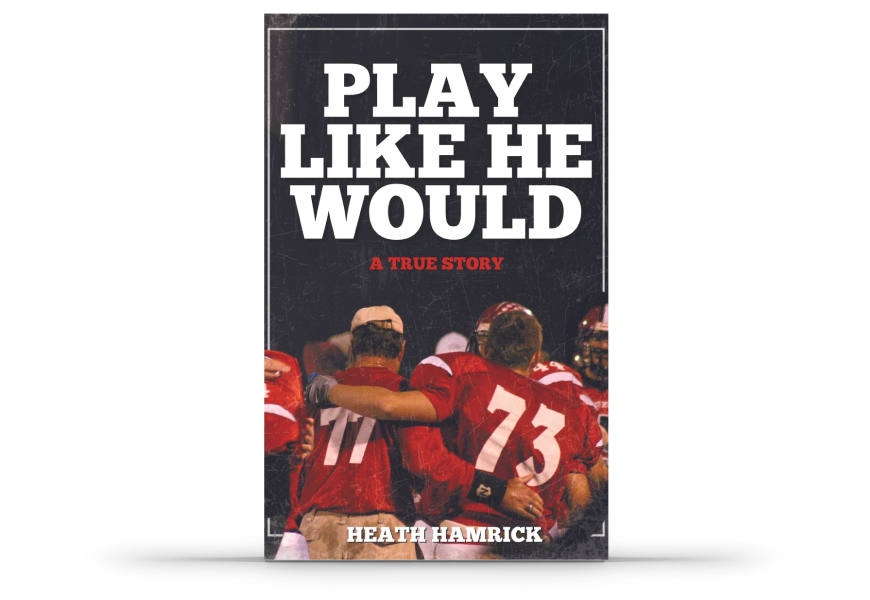
Play Like He Would

When 16-year-old Jason Yancy collapsed and died during a 1999 Texas high school football game, his teammates faced an impossible question: How do you continue after losing your heart? This true story follows the Bremond Tigers as they honor their fallen friend’s memory with a simple motto: “Play Like He Would.”

Lone Star Literary Life

“The tale Heath Hamrick weaves is part small-town history, part memoir, part remembrance…But the main focus of the book is how a team and a community grieve when they lose a player, a brother, a friend.” 

Read More
About

A True Story of Loss, Legacy, and What It Means to Never Give Up

On a crisp October night in 1999, the Bremond Tigers took the field in Milano, Texas, carrying the hopes of their small town. Then, in a single devastating moment, 16-year-old Jason Yancy collapsed and died of an undiagnosed heart condition, leaving his teammates, coaches, and community shattered.

Play Like He Would tells the unforgettable true story of how a group of teenage boys and their coach, Jerry “Slugger” Hamrick, found the strength to continue after tragedy struck at the heart of their team. Jason wasn’t just another player—he was the soul of the Tigers, a kid without a mean heart who lifted everyone around him with his infectious smile and unwavering determination.

Author Heath Hamrick, the coach’s son who witnessed that terrible night, draws from extensive interviews conducted shortly after Jason’s death to reconstruct the raw emotions and difficult decisions that followed. From the locker room, where Jason’s helmet still hangs, to the cemetery where teammates left their own tribute, this is a story about more than football—it’s about how we face the unthinkable and find ways to honor those we’ve lost.

Set against the backdrop of Texas high school football, where Friday night lights illuminate both triumph and heartbreak, this deeply personal memoir explores themes that resonate far beyond the gridiron: How do we handle loss? How do we move forward when life takes something precious from us? And what does it truly mean to live up to someone’s memory?

With its unflinching honesty about grief and its celebration of resilience, Play Like He Would reveals how Jason’s legacy became a rallying cry that sustained his teammates through championship seasons and personal struggles. Some stories are about winning; this one is about something far more important—learning how to keep playing when the game itself seems lost.

Details

Category: Sports, Nonfiction

Publication Date: July 28, 2026

ISBN (Paper): 978-1-965766-49-1

ISBN (Ebook): 978-1-965766-51-4

List Price: $23.95

Pages: 180

Trim size: 6 x 9

Reviews
Lone Star Literary Life

Football has always been big in Texas, and there’s not much bigger in many small towns than high school football. Friday Night Lights. Family, tradition, and hopefully triumph on the field. In Play Like He Would, Heath Hamrick looks at the impact of a tragic loss on one high school football team and community. Jerry “Slugger” Hamrick came to the little town of Bremond, Texas, looking for a job. His family had moved several times, following his coaching career all over Texas. The Bremond Tigers had a winning history, but recent seasons had been unkind. Was this a place Slugger Hamrick could win? He believed it was. So when the job was offered to him, he packed up his wife and two school-age sons and took it. The 1999 season was Slugger’s third as head coach, and it was likely to be a “make or break” season. By year three, the football faithful expected to see a winning season, a trip to the playoffs. The odds did not appear to favor the Tigers—as practice kicked off, “there were no world-beaters in the room that Slugger could see.” But sixteen-year-old Jason “Meat” Yancy was the smiling, encouraging heart of the team. As the players worked to come together, Slugger saw Jason improving a little with every play and thought, “That boy…is the reason guys like me do what we do.” The tale Heath Hamrick weaves is part small-town history, part memoir, part remembrance. He weaves his own experiences in Bremond with family history, the shenanigans of local teenagers, and, of course, football. But the main focus of the book is how a team and a community grieve when they lose a player, a brother, a friend. To his friends, Jason Yancy seemed to lack his usual joie de vivre that day, but no one ever expected he wouldn’t see the end of the game. When he collapsed on the field, the town was in shock, and as with any loss, people dealt with grief in different ways. Hamrick draws on his own memories and conversations with Jason’s teammates, friends, and family, some held during the students’ high school years, to reconstruct how the team came together to honor their fallen friend’s memory. “Play Like He Would” became a rallying cry to remind those young men to play to win, as Jason would have. To treat each other with kindness, like Jason would have. To strive to be better people, like Jason would have. Before the fateful game on October 1, 1999, coach Chuck Caskey prayed, “Put angels on our shoulders tonight, and keep us from harm.” For the Bremond Tigers, Jason Yancy became the angel on their shoulder through what should have been the rest of his high school years. While the book faces a weighty subject head-on, it is not without its moments of humor. At one point, Slugger’s frustration with one of his young players overwhelms him, and he screams, “You make me want to crap in my hands and rub it in my hair!” Whether they’ve coached a sport or not, everyone who has ever worked with children, or had children, or been around children for any significant length of time, will likely find that relatable. And when Hamrick describes the good-natured jokes Jason Yancy pulled on friends and teachers alike, it is clear why his death was so profoundly felt. Hamrick also explores how even the deepest grief loses its sharp edges over time. Slugger mounted Jason’s helmet on the locker room wall as a memorial, and it became a tradition for players to touch the helmet on the way out to the field. He thought of future athletes continuing that tradition, with “a momentary vision of Tigers with faces he didn’t recognize, passing by the helmet, touching the memory of someone they had never known.” The book closes with an epilogue, in which Hamrick provides details of what some of the key figures went on to do with their lives. Clearly, Jason Yancy’s memory continued to resonate in the lives of those who had known and loved him and continued to inspire them to “Play Like He Would.” And that’s the best legacy any of us can hope to leave Heath Hamrick was born in Pasadena, Texas, into a third-generation coaching family. He grew up watching his father, Slugger Hamrick, coach in places ranging from Central Texas to the Rio Grande Valley and back again. A lifelong educator, Heath occasionally has time to dress up as a historical figure to produce videos as “Heath the History Guy” on YouTube. He is also just possibly the most naive political operative in American history, having co-written Worse Than You Think: The Mostly True Story of Two Teachers Running for Congress Deep in the Heart of Texas for TCU Press. Perhaps most importantly of all, Heath was present in Milano on that night in October of 1999 when an entire town mourned for a young man whose life had been cut tragically short. He was also there as those same young men who had sat with tear-streaked faces in the Milano locker rooms bounced back in the memory of #77 and brought a town and a team back to life.


About the Author

Heath Hamrick

Heath Hamrick was born in Pasadena, Texas, into a third-generation coaching family. He grew up watching his father, Slugger Hamrick, coach in places ranging from Central Texas to the Rio Grande Valley and back again. A lifelong educator, Heath occasionally has time to dress up as a historical figure to produce videos as "Heath the History Guy" on YouTube. He is also just possibly the most naive political operative in American history, having co-written Worse Than You Think: The Mostly True Story Of Two Teachers Running For Congress Deep In The Heart Of Texas for TCU Press.

Perhaps most importantly of all, Heath was present in Milano on that night in October of 1999 when an entire town mourned for a young man whose life had been cut tragically short. He was also there as those same young men who had sat with tear-streaked faces in the Milano locker rooms bounced back in the memory of #77 and brought a town and a team back to life.

In the Media

Lone Star Literary Life

“The tale Heath Hamrick weaves is part small-town history, part memoir, part remembrance…But the main focus of the book is how a team and a community grieve when they lose a player, a brother, a friend.” 

Reviews

Lone Star Literary Life

Football has always been big in Texas, and there’s not much bigger in many small towns than high school football. Friday Night Lights. Family, tradition, and hopefully triumph on the field. In Play Like He Would, Heath Hamrick looks at the impact of a tragic loss on one high school football team and community. Jerry “Slugger” Hamrick came to the little town of Bremond, Texas, looking for a job. His family had moved several times, following his coaching career all over Texas. The Bremond Tigers had a winning history, but recent seasons had been unkind. Was this a place Slugger Hamrick could win? He believed it was. So when the job was offered to him, he packed up his wife and two school-age sons and took it. The 1999 season was Slugger’s third as head coach, and it was likely to be a “make or break” season. By year three, the football faithful expected to see a winning season, a trip to the playoffs. The odds did not appear to favor the Tigers—as practice kicked off, “there were no world-beaters in the room that Slugger could see.” But sixteen-year-old Jason “Meat” Yancy was the smiling, encouraging heart of the team. As the players worked to come together, Slugger saw Jason improving a little with every play and thought, “That boy…is the reason guys like me do what we do.” The tale Heath Hamrick weaves is part small-town history, part memoir, part remembrance. He weaves his own experiences in Bremond with family history, the shenanigans of local teenagers, and, of course, football. But the main focus of the book is how a team and a community grieve when they lose a player, a brother, a friend. To his friends, Jason Yancy seemed to lack his usual joie de vivre that day, but no one ever expected he wouldn’t see the end of the game. When he collapsed on the field, the town was in shock, and as with any loss, people dealt with grief in different ways. Hamrick draws on his own memories and conversations with Jason’s teammates, friends, and family, some held during the students’ high school years, to reconstruct how the team came together to honor their fallen friend’s memory. “Play Like He Would” became a rallying cry to remind those young men to play to win, as Jason would have. To treat each other with kindness, like Jason would have. To strive to be better people, like Jason would have. Before the fateful game on October 1, 1999, coach Chuck Caskey prayed, “Put angels on our shoulders tonight, and keep us from harm.” For the Bremond Tigers, Jason Yancy became the angel on their shoulder through what should have been the rest of his high school years. While the book faces a weighty subject head-on, it is not without its moments of humor. At one point, Slugger’s frustration with one of his young players overwhelms him, and he screams, “You make me want to crap in my hands and rub it in my hair!” Whether they’ve coached a sport or not, everyone who has ever worked with children, or had children, or been around children for any significant length of time, will likely find that relatable. And when Hamrick describes the good-natured jokes Jason Yancy pulled on friends and teachers alike, it is clear why his death was so profoundly felt. Hamrick also explores how even the deepest grief loses its sharp edges over time. Slugger mounted Jason’s helmet on the locker room wall as a memorial, and it became a tradition for players to touch the helmet on the way out to the field. He thought of future athletes continuing that tradition, with “a momentary vision of Tigers with faces he didn’t recognize, passing by the helmet, touching the memory of someone they had never known.” The book closes with an epilogue, in which Hamrick provides details of what some of the key figures went on to do with their lives. Clearly, Jason Yancy’s memory continued to resonate in the lives of those who had known and loved him and continued to inspire them to “Play Like He Would.” And that’s the best legacy any of us can hope to leave Heath Hamrick was born in Pasadena, Texas, into a third-generation coaching family. He grew up watching his father, Slugger Hamrick, coach in places ranging from Central Texas to the Rio Grande Valley and back again. A lifelong educator, Heath occasionally has time to dress up as a historical figure to produce videos as “Heath the History Guy” on YouTube. He is also just possibly the most naive political operative in American history, having co-written Worse Than You Think: The Mostly True Story of Two Teachers Running for Congress Deep in the Heart of Texas for TCU Press. Perhaps most importantly of all, Heath was present in Milano on that night in October of 1999 when an entire town mourned for a young man whose life had been cut tragically short. He was also there as those same young men who had sat with tear-streaked faces in the Milano locker rooms bounced back in the memory of #77 and brought a town and a team back to life.