

BlueInk Review

“An immersive read, Dispatches from Moscow combines an accurate portrait of the period with a page-turning plot. The author is well-versed in her subject, having been stationed in the Soviet Union as an Associated Press reporter at that time. The love story is compelling; the book has a strong sense of place, and even the newsroom politics and Natalie’s missteps have the kind of detail that would be difficult to imagine without on-the-ground knowledge. Readers will find this story as edifying as it is entertaining.”

Read More

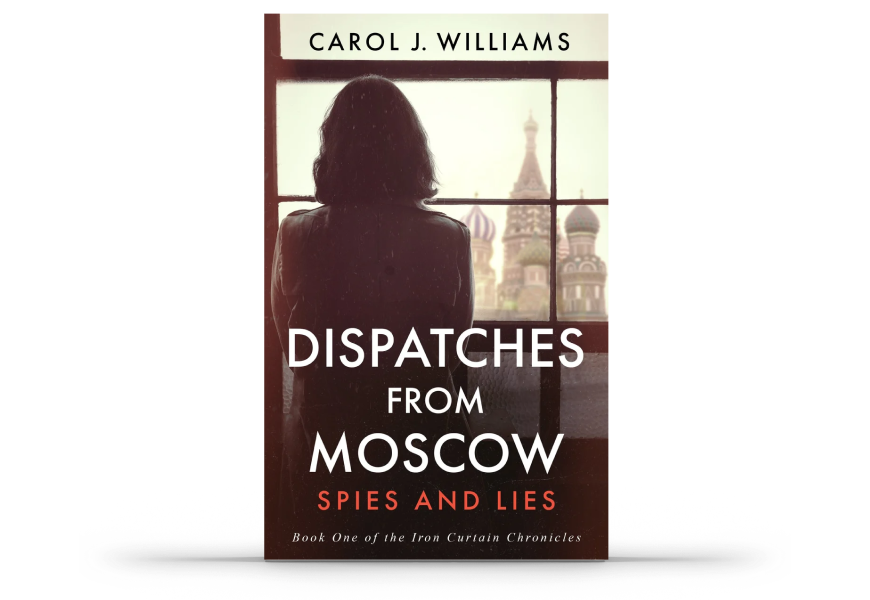
Dispatches From Moscow

Spies and Lies

Based on the author’s experiences, this meticulously researched thriller captures forbidden love against perestroika’s historic upheaval—where idealism faces deadly consequences. American correspondent Natalie Chester arrives in Moscow in 1986 and soon falls for Soviet diplomat Anatoly Kuznetsov. Together, they navigate Chernobyl’s aftermath, KGB surveillance, and the collapsing Cold War. Dispatches from Moscow: Spies and Lies by Carol J. Williams, Book One in the Iron Curtain Chronicles is a tale of professional ambition and personal sacrifice, of idealism tested by reality, and of a love that burns brightest in the shadow of the Iron Curtain’s final days.meticulously researched thriller.


BlueInk Review

“An immersive read, Dispatches from Moscow combines an accurate portrait of the period with a page-turning plot. The author is well-versed in her subject, having been stationed in the Soviet Union as an Associated Press reporter at that time. The love story is compelling; the book has a strong sense of place, and even the newsroom politics and Natalie’s missteps have the kind of detail that would be difficult to imagine without on-the-ground knowledge. Readers will find this story as edifying as it is entertaining.”

Read More
About

BOOK ONE OF THE IRON CURTAIN CHRONICLES

A sweeping Cold War love story set against the crumbling Soviet empire

Inspired by the author’s own experiences as a Moscow correspondent during perestroika, Dispatches from Moscow is a meticulously researched thriller that captures the intoxicating danger of journalism in an authoritarian state and the impossible choices faced by those who dare to imagine a better world. It’s a story of professional ambition and personal sacrifice, of idealism tested by reality, and of a love that burns brightest in the shadow of the Iron Curtain’s final days.

Moscow, 1986. Natalie Chester has finally achieved her dream: a posting as an American news correspondent in the USSR at the very moment history pivots. But within days of her arrival, the Chernobyl disaster erupts, her fiancé abandons her, and her bureau chief wages a relentless campaign to destroy her career.

Then she meets Anatoly Kuznetsov—a rising Soviet diplomat whose Nordic looks and reformist ideals set him apart from the gray functionaries of the Kremlin. Their attraction is immediate and dangerous. As they navigate secret meetings, KGB surveillance, and the disapproval of both governments, Natalie and Tolya become allies in a larger mission: to help end the Cold War before it ends humanity.

From the radioactive aftermath of Chernobyl to clandestine trips through the Estonian countryside, from war-torn Afghanistan to a cherry blossom proposal in Tokyo, their love affair unfolds against the decade’s most dramatic events—the Reykjavik summit, Gorbachev’s glasnost reforms, and the brutal suppression of Baltic independence movements. But as the Soviet empire begins its death throes, the couple discovers that the hardliners willing to kill for the old order will stop at nothing to preserve their power.

Natalie Chester’s adventures continue in Book Two, Dispatches from Berlin: Walls and Secrets. 


Details

Category: Fiction, Thriller

Publication Date: April 21, 2026

ISBN (Paper):978-1-965766-59-0

ISBN (Ebook): 978-1-965766-62-0

List price: $23.95

Pages: 356

Trim size: 5.5 x 8.5


Reviews
US Ambassador Marie Yovanovitch (ret), veteran diplomat in former Soviet states and author of Lessons from the Edge

“This fast-paced novel about an idealistic young journalist on her first foreign posting to the USSR transports us back to the waning days of Reagan's ‘Evil Empire,’ reminds us of the high stakes of the nuclear standoff during the Cold War, and introduces us to the many communities (musicians, "refuseniks," even Soviet bureaucrats) who quietly undercut the regime. As her heroine navigates this complex environment, Carol Williams skillfully paints the big picture for us: the specter of Soviet oppression, the Chernobyl disaster, the Afghan invasion, and the hope we felt when the Soviet Union collapsed. A great read by this breakout author.“

Thomas Kent, Associated Press Moscow correspondent, editor and executive 1979-2000, author of How Russia Loses.

"Foreigners thought that since the Soviet Union was such a top-down society, Gorbachev could simply order bureaucrats to be creative and entrepreneurial, the KGB to put human rights first, and newspapers to write freely. Perestroika and glasnost were excellent ideas in principle, but they threatened many of the country’s top officials and institutions. Gorbachev’s tragedy was not to realize that they would fight back."

Alison Smale, Associated Press Moscow correspondent and Eastern Europe bureau chief 1983-1999.

"Delivering truth to the world under surveillance by the office drivers and translators, your housekeeper, the janitors in your apartment building and the militiaman at your door; deafened by booming rock music so the KGB couldn’t hear what you were whispering about in the bathroom; staying vigilant to all the ways you could get arrested or expelled; blowing off steam at ex-pat parties and dancing 'til dawn; having the time of our lives covering news that changed the world. That was the correspondent's life in Moscow of the 1980s."

FAQ

What is Dispatches from Moscow about?

Dispatches from Moscow follows American correspondent Natalie Chester through the last years of the Soviet Union — Chernobyl, the Reykjavik summit, Gorbachev’s glasnost reforms, and the suppression of the Baltic independence movements. Her relationship with Soviet diplomat Anatoly Kuznetsov puts both of them under KGB attention, and eventually in the way of people willing to kill to keep the old order.

What order do the Iron Curtain Chronicles go in?

Dispatches from Moscow: Spies and Lies is Book One, set from 1986 through the end of the decade. Dispatches from Berlin: Walls and Secrets picks up Natalie Chester on the night the Berlin Wall opens in November 1989 and publishes October 27, 2026. Same correspondent, continuous timeline — read Moscow first. And Natalie’s story will continue in Book Three, Dispatches from Sarajevo: Crosses and Crescents, coming soon.

Is Dispatches from Moscow based on true events?

The characters are fictional, but Carol J. Williams covered the Soviet Union as a Moscow correspondent during perestroika, and the events around them are documented — Chernobyl, Reykjavik, glasnost, and the Baltic crackdowns.

What genre is Dispatches from Moscow?

A Cold War thriller with a love story at its center, grounded in the real chronology of the Soviet collapse.

About the Author

Carol J. Williams

Carol J. Williams is a retired foreign correspondent who covered the historic upheaval that ended the Cold War in an award-winning 35-year career with Associated Press and Los Angeles Times.

She lived through the USSR's brief era of hope for reform and the tragic consequences of its failure. She followed Eastern Europe's euphoric rebellions that toppled Communist tyrants from Berlin to Bucharest. In Yugoslavia, she documented the rise of ethnic and religious nationalism fanned by corrupt leaders who pushed their peoples into devastating wars. Her dispatches from Afghanistan, Iraq, and Ukraine traced those conflicts to unresolved ideological disputes from their days of imperial oppression.

Williams is a graduate of the University of Washington and holds a journalist law certificate from Loyola Law School in Los Angeles. She lives with her husband Ken Olsen, a retired editor, in Silverdale, WA.

In the Media

BlueInk Review

“An immersive read, Dispatches from Moscow combines an accurate portrait of the period with a page-turning plot. The author is well-versed in her subject, having been stationed in the Soviet Union as an Associated Press reporter at that time. The love story is compelling; the book has a strong sense of place, and even the newsroom politics and Natalie’s missteps have the kind of detail that would be difficult to imagine without on-the-ground knowledge. Readers will find this story as edifying as it is entertaining.”

Read more

Booklife Reviews

“Readers get a front row seat to the dangers—and thrills—of being a foreign correspondent in a country teetering on the edge of reform. [A] haunting portrait of the paranoia and fragile hope of the USSR’s final years.”

Kirkus Reviews

“Williams draws on her own experiences as a foreign correspondent for this novel, writing from a place of authenticity in a setting of historic upheaval.”

Reviews

US Ambassador Marie Yovanovitch (ret), veteran diplomat in former Soviet states and author of Lessons from the Edge

“This fast-paced novel about an idealistic young journalist on her first foreign posting to the USSR transports us back to the waning days of Reagan's ‘Evil Empire,’ reminds us of the high stakes of the nuclear standoff during the Cold War, and introduces us to the many communities (musicians, "refuseniks," even Soviet bureaucrats) who quietly undercut the regime. As her heroine navigates this complex environment, Carol Williams skillfully paints the big picture for us: the specter of Soviet oppression, the Chernobyl disaster, the Afghan invasion, and the hope we felt when the Soviet Union collapsed. A great read by this breakout author.“

Thomas Kent, Associated Press Moscow correspondent, editor and executive 1979-2000, author of How Russia Loses.

"Foreigners thought that since the Soviet Union was such a top-down society, Gorbachev could simply order bureaucrats to be creative and entrepreneurial, the KGB to put human rights first, and newspapers to write freely. Perestroika and glasnost were excellent ideas in principle, but they threatened many of the country’s top officials and institutions. Gorbachev’s tragedy was not to realize that they would fight back."

Alison Smale, Associated Press Moscow correspondent and Eastern Europe bureau chief 1983-1999.

"Delivering truth to the world under surveillance by the office drivers and translators, your housekeeper, the janitors in your apartment building and the militiaman at your door; deafened by booming rock music so the KGB couldn’t hear what you were whispering about in the bathroom; staying vigilant to all the ways you could get arrested or expelled; blowing off steam at ex-pat parties and dancing 'til dawn; having the time of our lives covering news that changed the world. That was the correspondent's life in Moscow of the 1980s."